Vermeer centrum
Geheimen van Vermeer
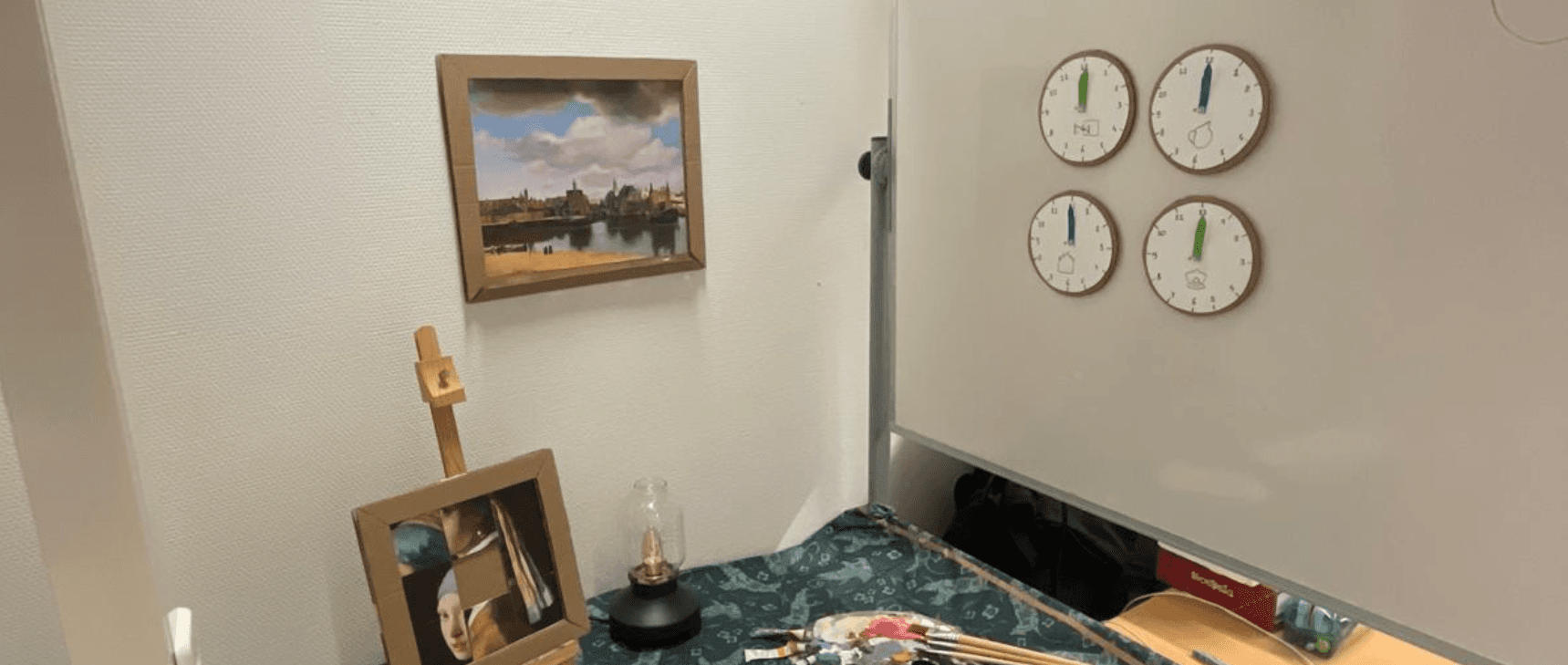
This project focuses on creating an interactive escape room experience for the Vermeer Centrum Delft. The goal is to help young visitors aged 12–17 stay interested, feel less overwhelmed, and learn about Vermeer in a playful way. By combining digital and physical puzzles, the museum visit becomes more engaging, interactive, and easier to follow for this target group.
Timeline
5 months
My Role
UX/UI Designer
The Problem
Young visitors often feel overwhelmed in the museum.
Crowds and noise cause overstimulation, and long texts with a lot of information make it hard for them to stay focused. Because of this, the information does not stay with them, and they do not learn much during their visit. This makes it difficult for this target group to have a positive museum experience.
The Solution
The solution is an interactive escape room inside the Vermeer Museum. Visitors complete different tasks together in order to move forward. The escape room stimulates the senses and encourages teamwork, while visitors receive information about Vermeer. Because the information is offered in different ways, their concentration lasts longer and the information is remembered better, as it is needed at every step of the escape room.
Client request
How can we make sure that young people aged 12–17 move through the Vermeer Museum with more interest and calm, while taking into account differences in interests, culture, and skills?
Design Challenge
How can we create a museum experience for young people aged 12–17 that keeps their attention and helps them stay calm, while also making sure they learn about Vermeer in a way that matches their needs?
Research Findings
The museum can cause overstimulation for people with ADHD because of crowds and noise.
Source: Interview with target group
Users become overstimulated if they read too much text about topics they are not interested in. They may read it, but do not understand it.
Source: Test results prototype
Users like digital interactive elements, but they prefer being able to touch objects with texture.
Source: Test results prototype
The museum can cause overstimulation for people with ADHD because of crowds and noise.
Source: Interview with target group
The target group needs structure because of ADHD, but when activities are too repetitive, they quickly become boring.
Source: Interview with target group
Users want to have a clear goal and to be constantly engaged or actively involved.
Source: Test results prototype
The target group prefers to receive information through a video with subtitles.
Source: Observation with target group
Users prefer interactive museums. They usually do not read text panels, but prefer to watch videos instead.
Source: Interview with target group
Design Process
Step 1
Deskresearch
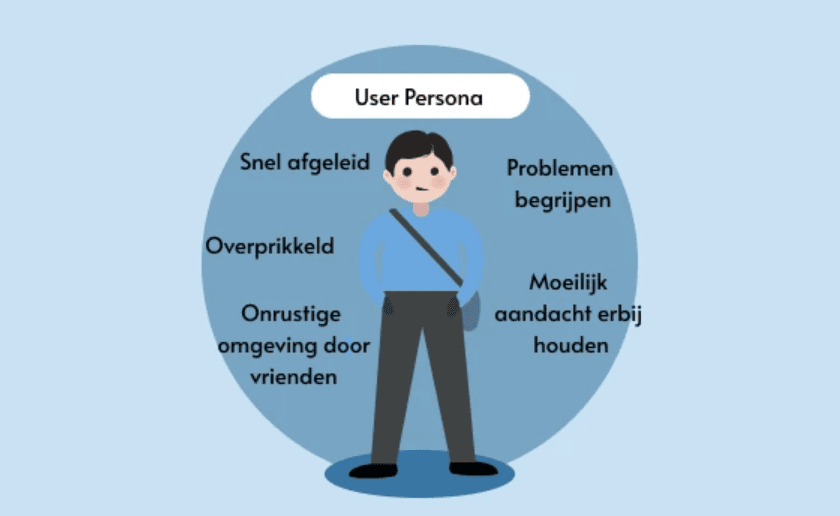
To start mapping out what our target group experiences when visiting a museum, we began with desk research. We consulted various sources to get an initial understanding of how we could help our target group. Using this information, we created a user persona to clearly outline their problems.
Step 2
Fieldresearch
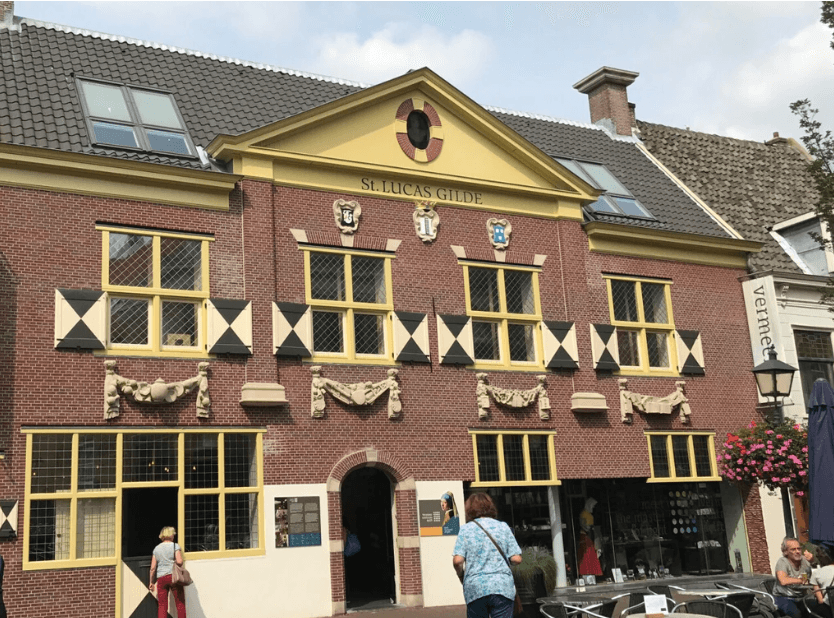
To better understand how the target group feels and experiences certain things, we also visited several museums ourselves. For example, we went to our client’s museum, the Vermeer Centrum Delft, which helped us discover the challenges students might face. It also allowed us to see how we could apply our future ideas and what we could work with.
Step 3
Involving Target Group
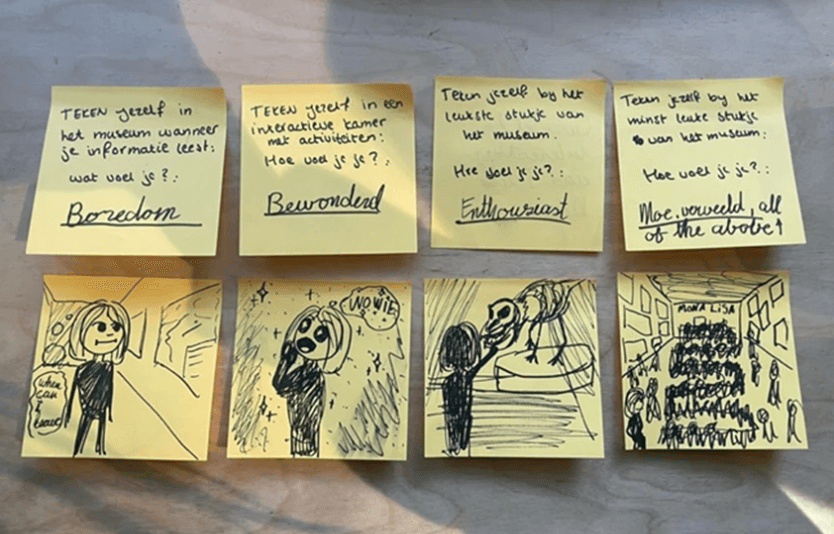
At every step of our design process, we made sure the target group was involved. For example, we held a draw your experience activity, as shown in the image, and we also tested our prototype with them. We wanted our design to truly help young people with ADHD gather more information during their museum visit.
Step 4
Low Fidelity Prototype
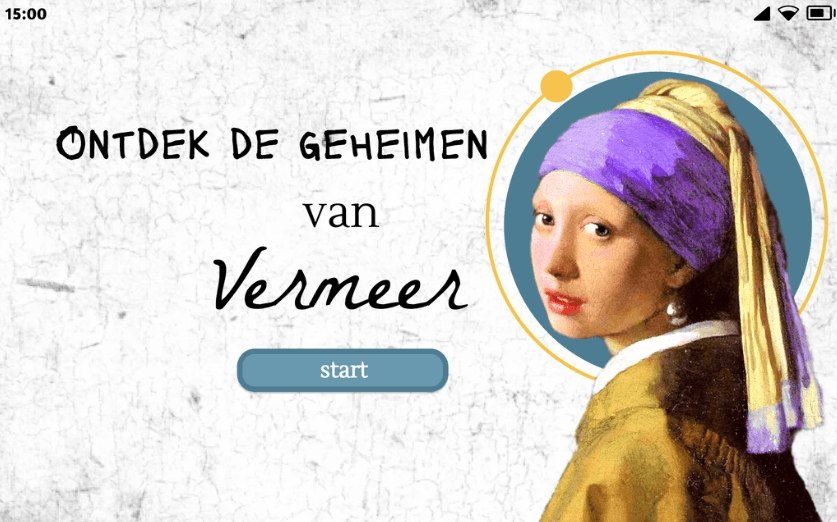
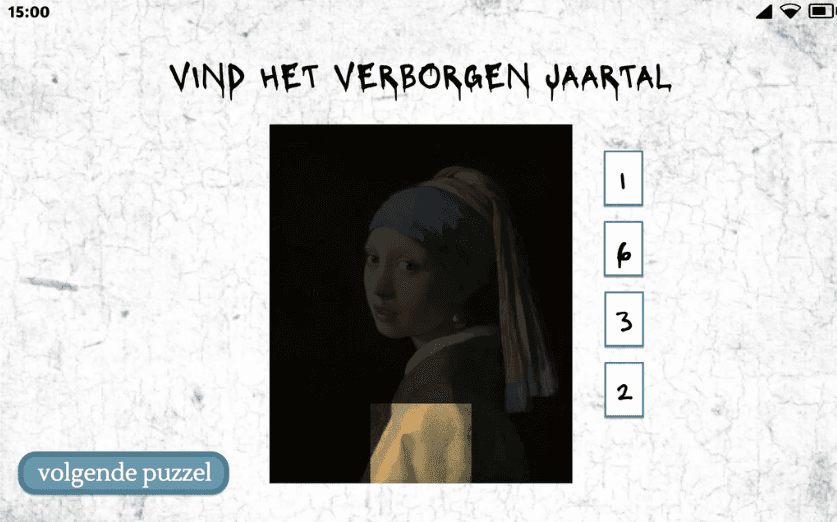
In our first iteration, we wanted to focus on the digital aspect of our escape room, while leaving out the physical elements. The digital part started with creating possible puzzles that could be played on a tablet. In this iteration, we conducted concept testing to find out if this idea would be interesting for our target group.
Step 5
Low Fidelity Test Results
The puzzles were fun, but users did not retain much information. Their attention dropped when they saw the same type of content repeatedly. Some puzzles were too long and difficult to understand, which made them less educational. The purpose of the puzzles was unclear, and users showed a preference for physical elements.
Step 6
Mid Fidelity Prototype
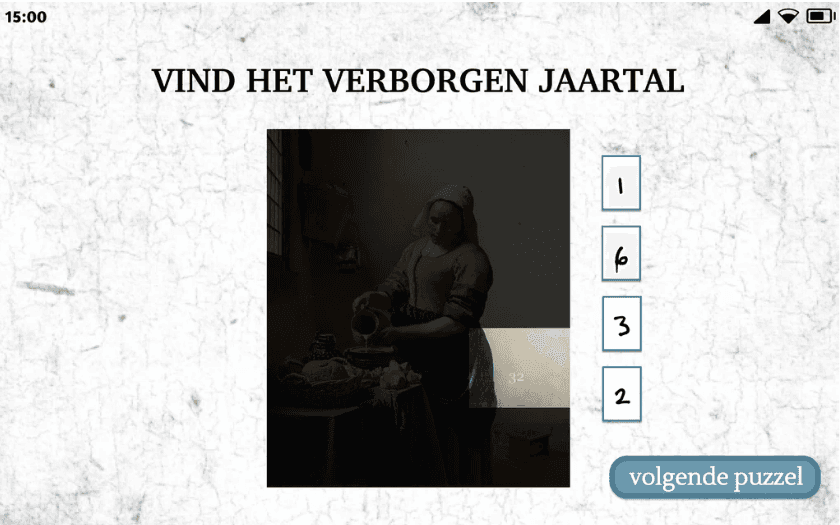
In our second iteration, we aimed to apply the feedback from iteration 1 to make our design closer to what the target group wanted. Along with improving the digital aspects and making the prototype clearer, we began developing the physical elements and worked on creating a strong connection between the digital and physical parts.
Step 7
Mid Fidelity Test Results
Users wanted to receive instructions beforehand. They responded positively to physical elements, such as the UV light and children’s blocks. However, it was still unclear when the second puzzle was completed. The prototype felt empty, and respondents did not feel they had learned anything new. Overall, users showed a clear preference for physical elements.
Step 8
High Fidelity Prototype
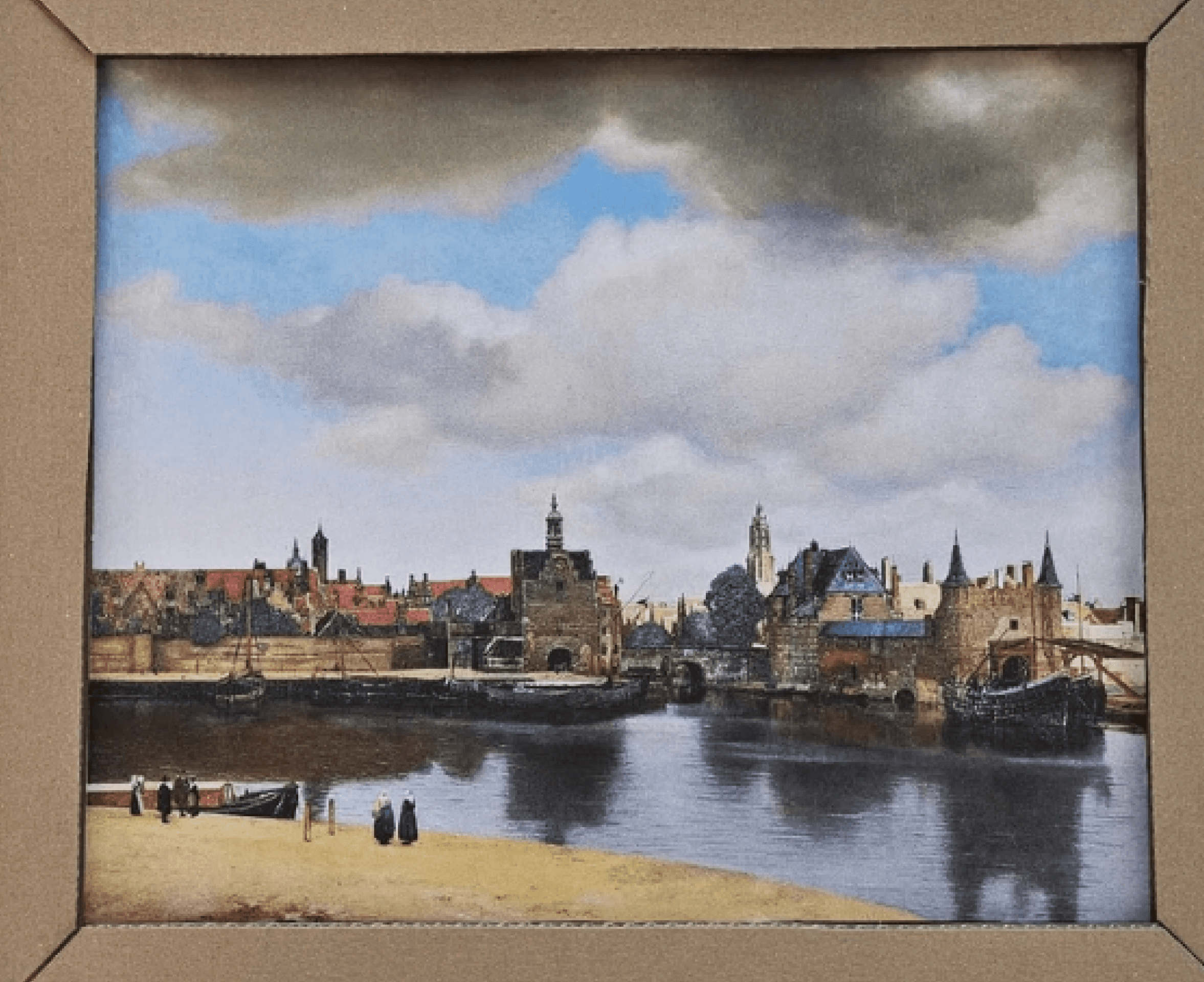
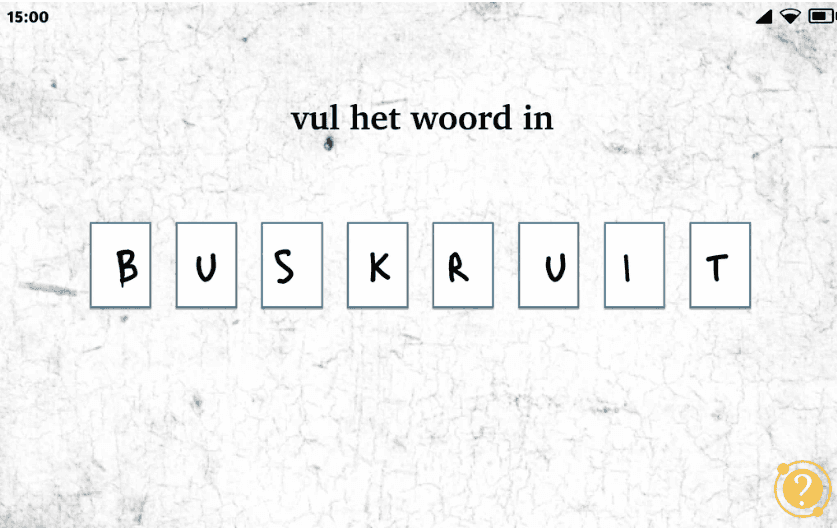
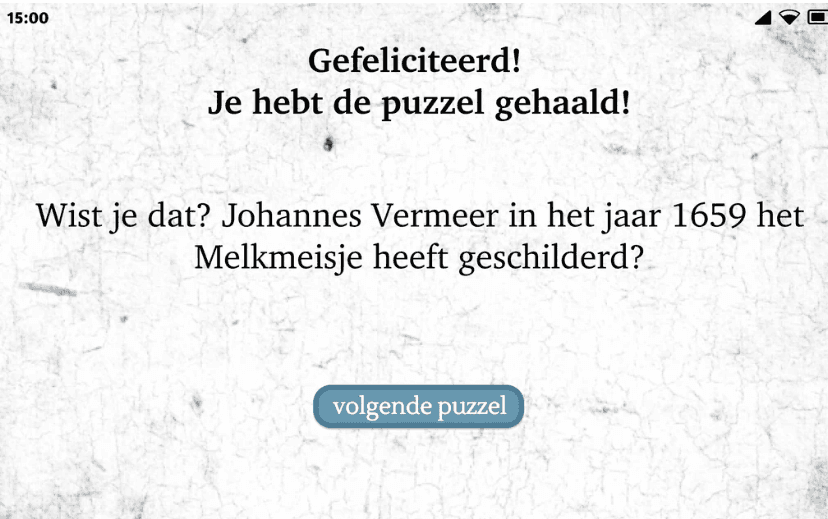
In our third and final iteration, we focused on combining the physical and digital elements. For example, users could enter a code they found physically to unlock the next digital puzzle. We also added fun facts to ensure that users felt they were learning something during the experience.
Step 9
High Fidelity Test Results
Respondents found the physical puzzles to be a good addition, but sometimes they did not understand what to do. They were very positive about including fun facts about Vermeer. However, it was unclear what the codes were used for, and some hints were still confusing for the users.
Final Results
After three iterations of testing and refinement, our final prototype is an escape room focused on collaboration and information sharing. It delivers information playfully through a mix of digital and physical elements, keeping users engaged. Research showed that the target group prefers variety, which is why both types of elements are included.
Desk and field research also revealed that the target group enjoys interactive and visual learning. Throughout the iterations, we conducted concept and usability testing to refine the design, as several early concepts were very similar. The final result can be seen in the video.
Key Features
Interactive Puzzles
Users solve both digital and physical puzzles, keeping them engaged while learning about Vermeer.
Physical Elements
Objects like UV lights and blocks can be touched and manipulated, making the experience more memorable.
Fun Facts Integration
Short, visual facts about Vermeer are included throughout the escape room to provide learning in a playful way.
Collaborative Gameplay
Tasks are designed for teamwork, encouraging users to work together while completing challenges and solving puzzles.
Recommendations
Calm Movement Is Unrealistic
We recommend acknowledging that young visitors naturally move quickly and get distracted. Instead of trying to make them walk calmly, focus on channeling their energy into interactive learning.
Adjust Information Delivery
We recommend redesigning the layout of the information about the artworks. Use white space, visuals, and short fragments to help the target group stay focused and remember what they learn.
Next Steps
1
Physical elements will be further developed so they can be reset and reused, creating a hands-on, interactive experience like a real escape room.
2
The order and layout of the digital puzzles will be improved to make them clearer and easier to follow.
3
A code will be added to unlock the final door, giving users a complete escape room experience.
Team Credits
Samantha v.d Hoogenband
Teammember
1079131@hr.nl
+06 333 34 725
Pepijn Groeneweg
Teammember
1079060@hr.nl
+06 391 87 456
Isra Martosoewondo
Teammember
1053162@hr.nl
+06 839 09 598
Raïsa Amir
Teammember
1053308@hr.nl
+31 6 9876 5432