Theater Walhalla
Backstage Pass
Theater Walhalla is a small, intimate theatre in Rotterdam’s Katendrecht district, hosting over 300 diverse performances each year for around 40,000 visitors. Me and my team made a interactive social game to slowly engage new visitors
Timeline
5 months
My Role
Strategist/Video editor/Visual Designer
The Problem
While marketing focuses on ticket sales and show themes, it doesn’t show Walhalla’s unique theatre experience. As a result, young adults often feel disconnected and unsure what to expect, seeing theatre as mainly for older audiences. Guided tours are offered a few times a year, but without a live performance, visitors miss the true atmosphere, making it hard to fully experience Walhalla.
The Solution
Young adults engage with Theater Walhalla through a playful, interactive game, taking on roles like actor, director, or technician to learn how a theatre works while having fun. This hands on experience sparks curiosity, builds recognition for real performances, and positions Walhalla as a space for experience, connection, and discovery.
Client request
How can new visitors experience an evening at Theater Walhalla through an immersive experience and get to know the theatre, without a live performance taking place?
Design Challenge
How can we introduce young adults (18–25) to Theater Walhalla in an accessible way through an interactive, social experience that creates a sense of community and motivates them to actually visit the theatre?
Research Findings
They prefer attending activities with friends rather than strangers.
Source: Interviews Abdullah, Pepijn & Tim – Team interview
Individuals with low social energy prefer calm, quiet locations for social interaction.
Source: Community research Annalisa
Young adults (18–25) often skip theatre due to cost, uncertainty, or fear of wasting time and money.
Source: Interviews Abdullah, Pepijn & Tim – Team interview
A sense of community is built through trust, shared goals, and structured support.
Source: Community research Annalisa
Design Process
Step 1
Deskresearch
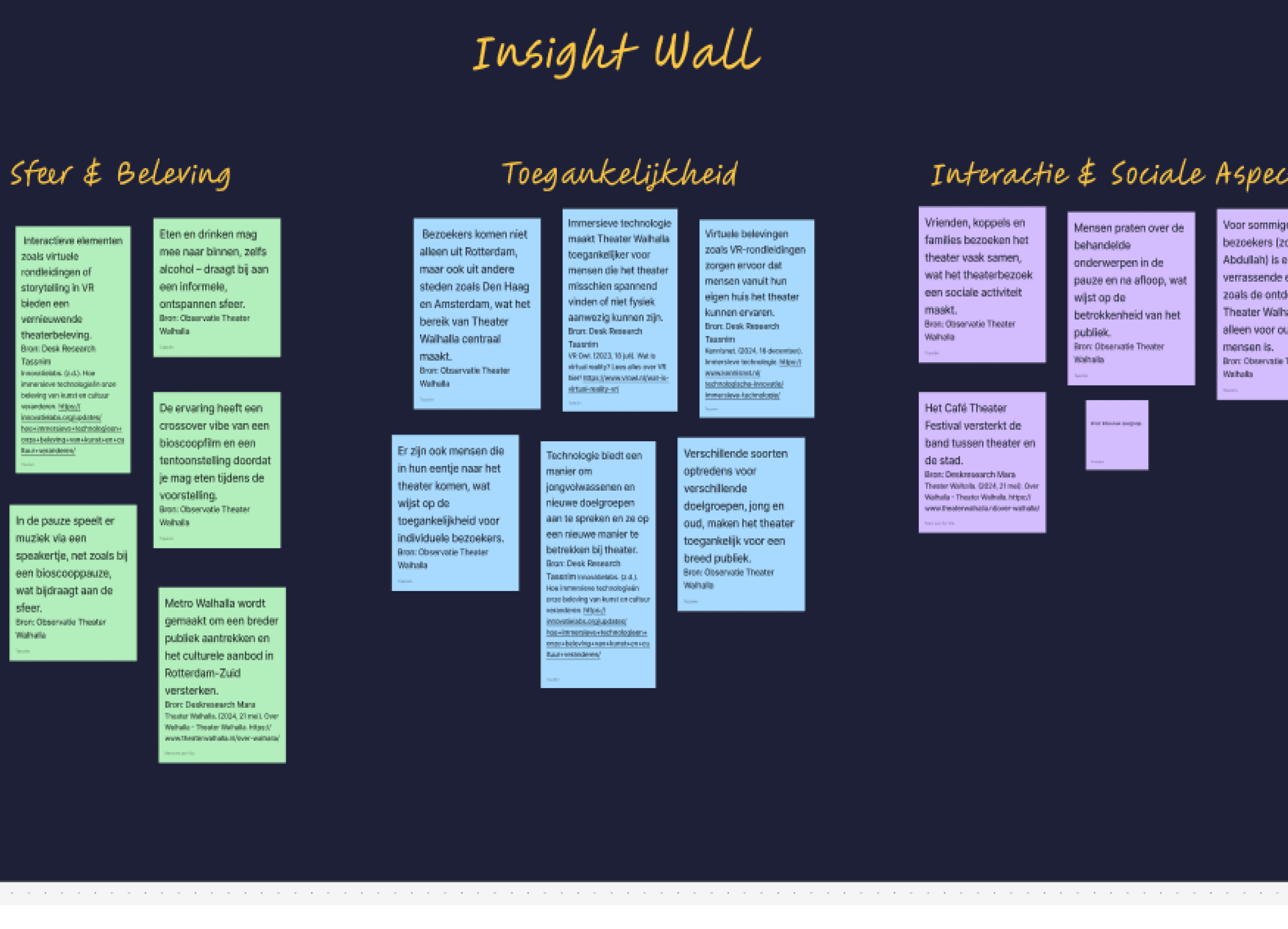
Immersive technologies like VR, AR, and 3D audio offer new ways to experience theatre, allowing first-time or hesitant visitors to explore the space through interactive, sensory rich experiences (Innovatielabs, n.d.; Techdepot – Michael, 2024). For Theater Walhalla, gamified digital experiences with visual and audio stimuli can make the theatre accessible and engaging even without a live performance. Building a strong community also enhances engagement, fostered through trust, collaboration, shared goals, and platforms that encourage interaction and feedback, adding real value to the overall theatre experience (Block, 2008; Quincé, 2024b; MeltingSpot, 2023).
Step 2
Fieldresearch
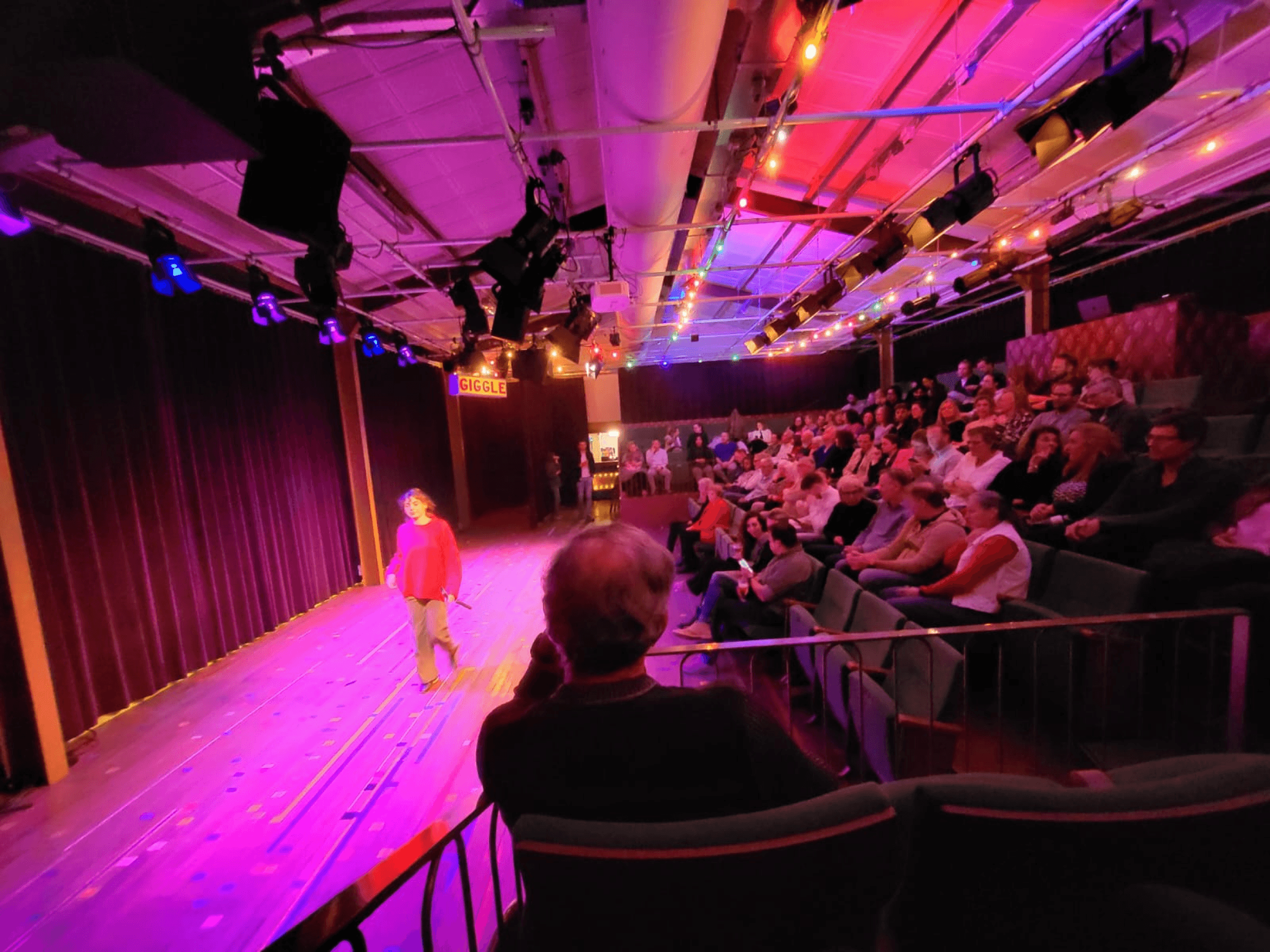
We visited Theater Walhalla to observe its audience, identify underrepresented age groups, and experience a live show ourselves. The venue is small, with performers close to the audience, and food and drink, including alcohol, are allowed. Most visitors are adults, attending with friends, family, or partners, and discussions about the show happen during intermission and afterward. Attendees and performers come from beyond Rotterdam, and the overall experience combines elements of cinema and exhibition, with music during breaks and a relaxed, social atmosphere.
Step 3
Makeweek
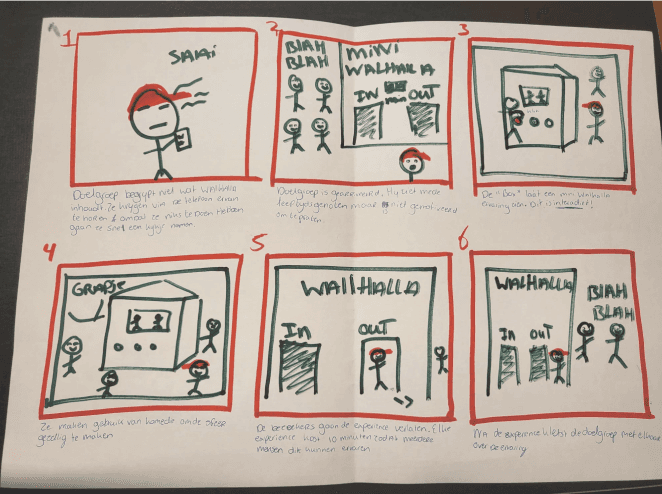
After gathering field research insights, Make Week began, with each team creating a scaled prototype focused on the experience and integrating at least one Stadslab technique. We mapped a customer journey and brainstormed around the theme “The most enjoyable moment at the theatre is discussing the experience together,” leading to a prototype featuring a 15-minute mini-experience of Walhalla, interactive gameplay, 4D elements like temperature and sound, and sharing the experience afterward to spark conversation.
Step 4
Sprintweek
After Make Week, we scrapped our initial idea and revisited our insights with a fresh perspective, defining our long-term goal, sprint questions, and target group: young adults aged 18–25. Using The Map, we identified stakeholders, touchpoints, and usage, focusing on schools, gamification, and collaboration. Lightning demos highlighted teamwork, multiple levels, roles, communication, comedy, and player choices, which informed our solution sketches; a multiplayer game with roles and tasks, dynamic gameplay, discussion moments, and roaming NPCs.
Step 5
Kill your Darling
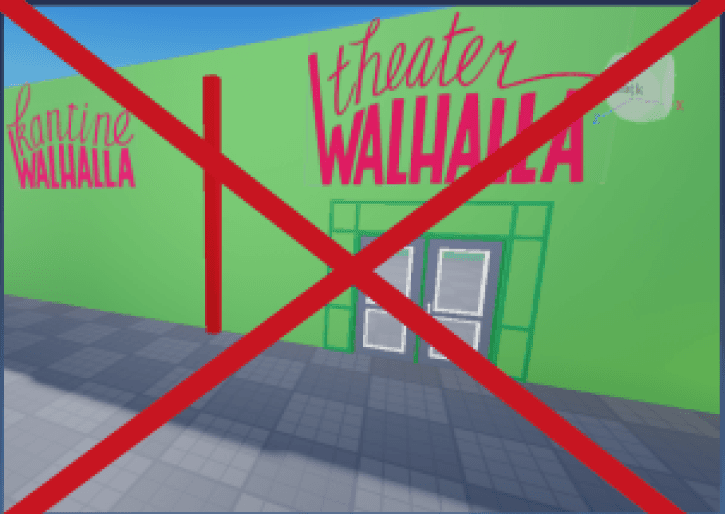
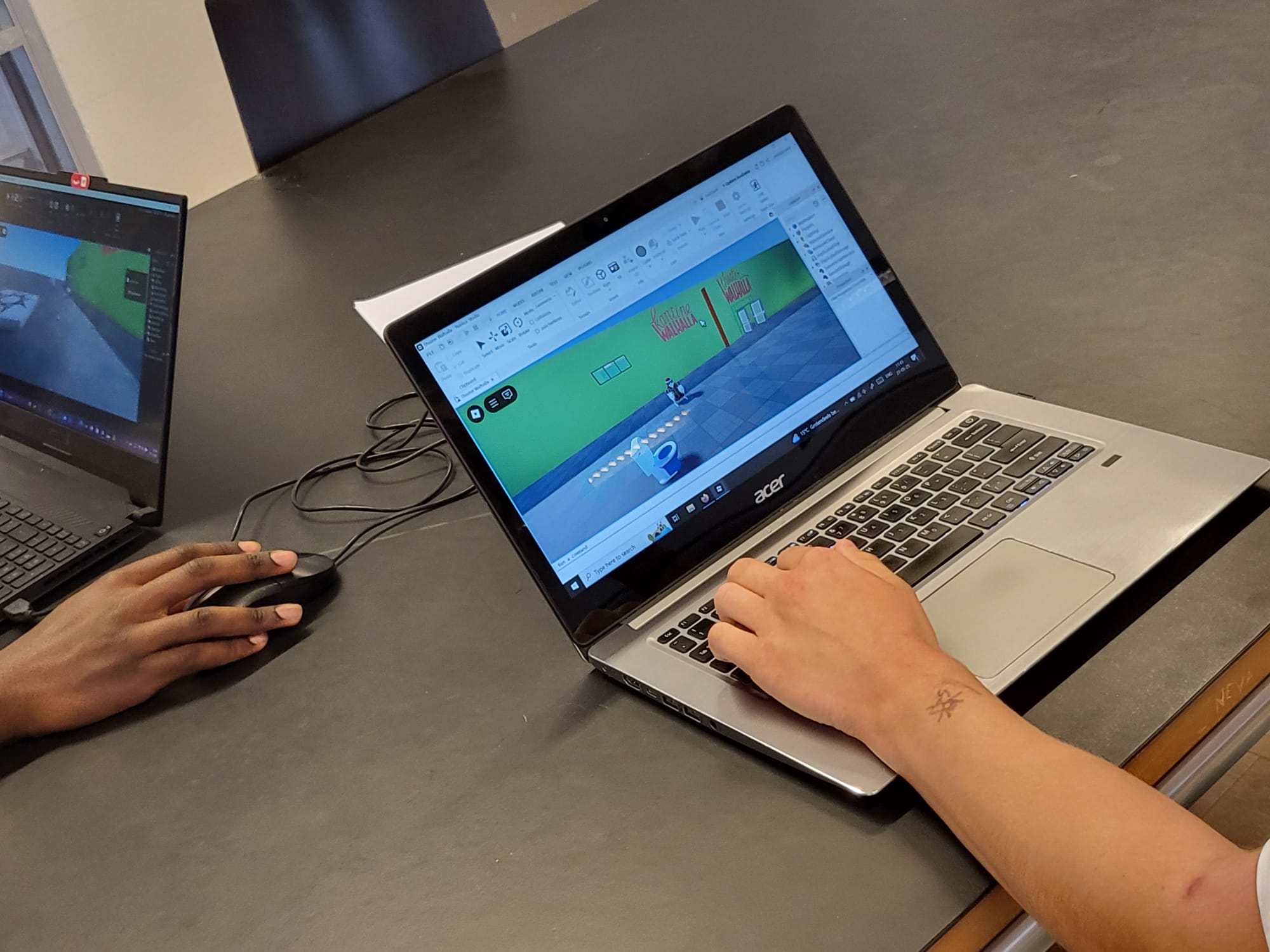
Throughout our process, we repeatedly had to “kill our darlings,” revising our concept 4–5 times. After Make Week, our initial mini Walhalla experience with 4D elements evolved into an interactive computer and VR game where players must identify and catch a saboteur. We tested different software—Roblox Studio, Unity, TouchStudio, and finally Figma—while refining gameplay and key mechanics. The iterations focused on collaboration, roles, minigames, and discussion moments during and after the experience. Each version brought us closer to a playful, interactive prototype that balanced immersion, teamwork, and engagement.
Step 6
Low Fidelity Prototype
In the first iteration, we developed a concept with four roles found at Theater Walhalla: cleaner, lighting & sound, actor, and bar staff. Each role had specific tasks, from cleaning the restroom to operating lights, applying makeup, or making a cappuccino. Players had to collaborate to identify and stop a hidden saboteur, experiencing the theatre behind the scenes in a playful way. This approach aimed to teach participants about Walhalla while fostering a sense of community through teamwork. We chose Roblox Studio for its accessibility and VR capabilities.
Step 7
Low Fidelity Test Results
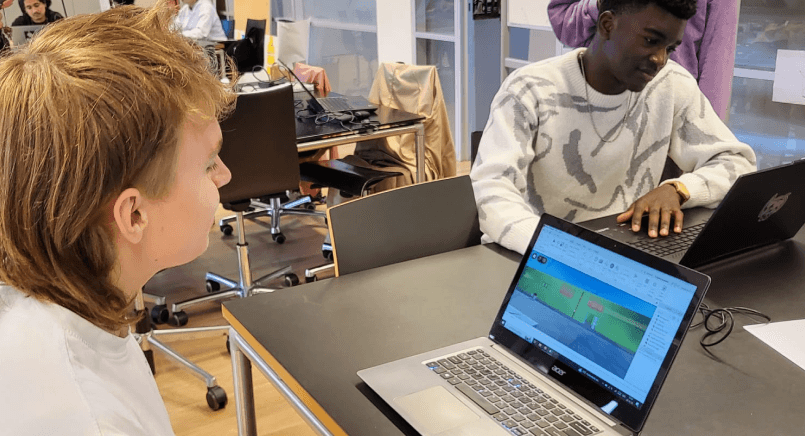
Testing revealed that players were quickly distracted by the avatars and visuals in Roblox, making the experience’s goal unclear. Instructions were vague, and there was no smooth transition to a real theatre experience, causing confusion. The digital platform also felt too childish and didn’t align with our target audience or the community focused experience we wanted. Based on these insights, we decided to move away from a fully digital platform and develop a physical experience with digital support. This approach encourages a sense of community and captures the atmosphere of Theater Walhalla.
Step 8
Mid Fidelity Prototype
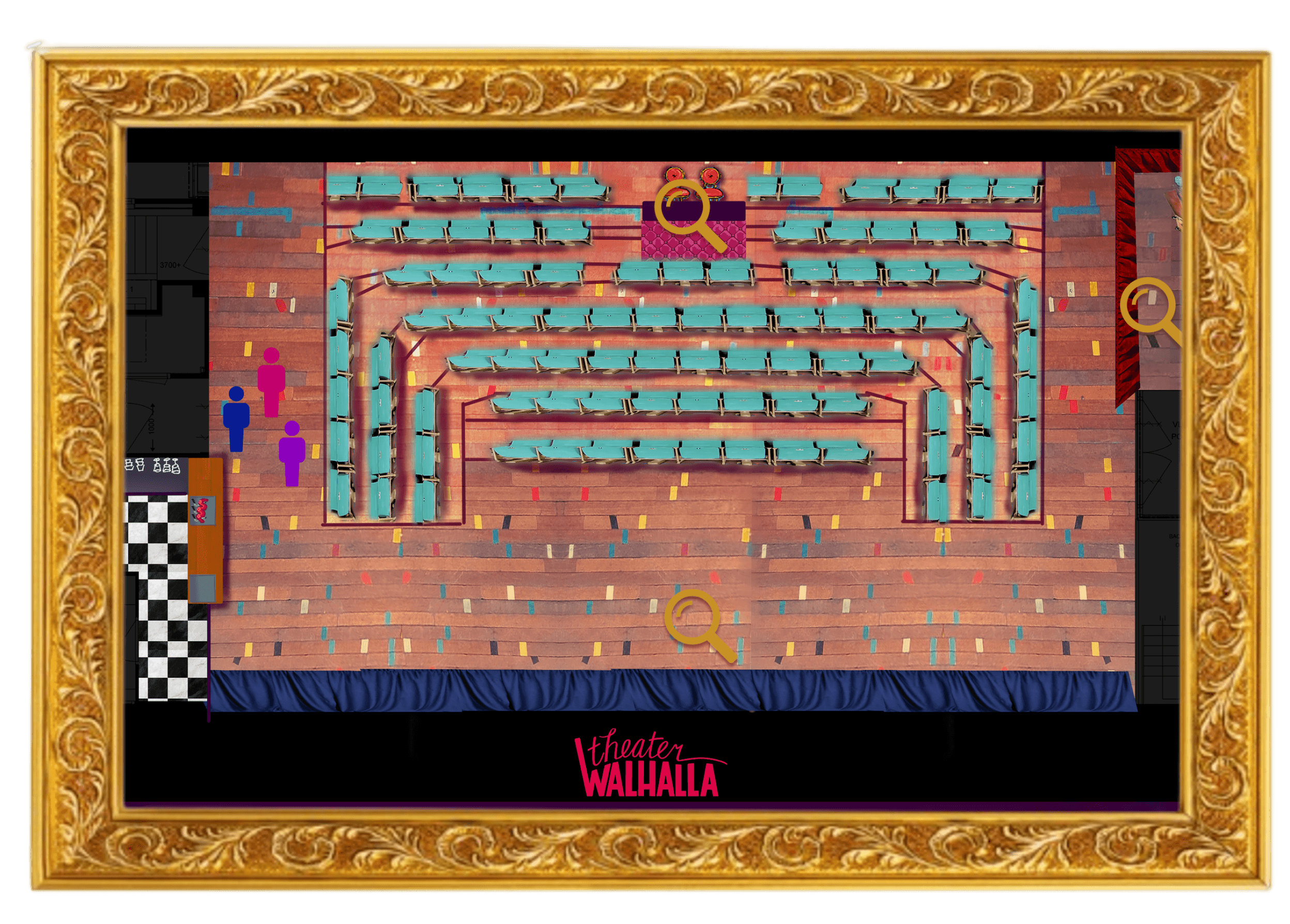
In this iteration, we focused on simplifying what we had originally planned in Roblox to make it more feasible for our team. Through brainstorming, we decided to keep collaboration, multiplayer, and role-play elements, but remove the saboteur mechanic to reduce complexity. The result was a 2D game featuring different Theater Walhalla roles, where players completed tasks specific to their assigned role.
Step 9
Mid Fidelity Test Results
The presentation raised questions about the purpose of our prototype and what we were trying to achieve. Test results showed that role tasks were too simple and lacked collaboration. As a team, we realized the prototype’s main value had been testing the platform rather than the content itself. It was time to develop a new concept that encouraged genuine player collaboration and fostered a sense of community.
Step 10
High Fidelity Prototype
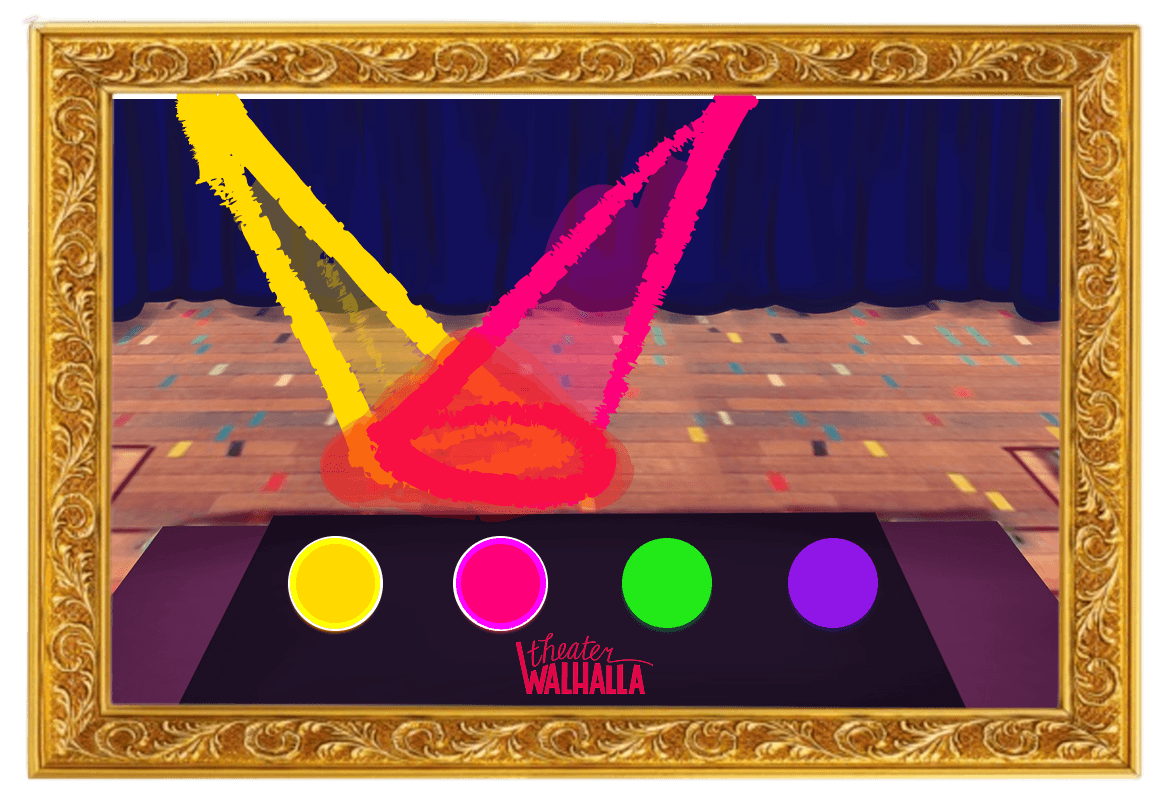
For the third prototype, Backstage Pass, we started by listing desired game features, such as player collaboration, and prioritized them using the MoSCoW method. Key features included conveying the atmosphere of Theater Walhalla, fostering player collaboration, clear instructions, a digital (immersive) game board, and visible game rules. Based on these, we developed a new prototype designed to introduce players to Walhalla through the style guide and mini-game topics. The mini-games focus on icebreaker activities, allowing players to get to know each other and fostering a sense of community during gameplay.
Step 11
High Fidelity Test Results
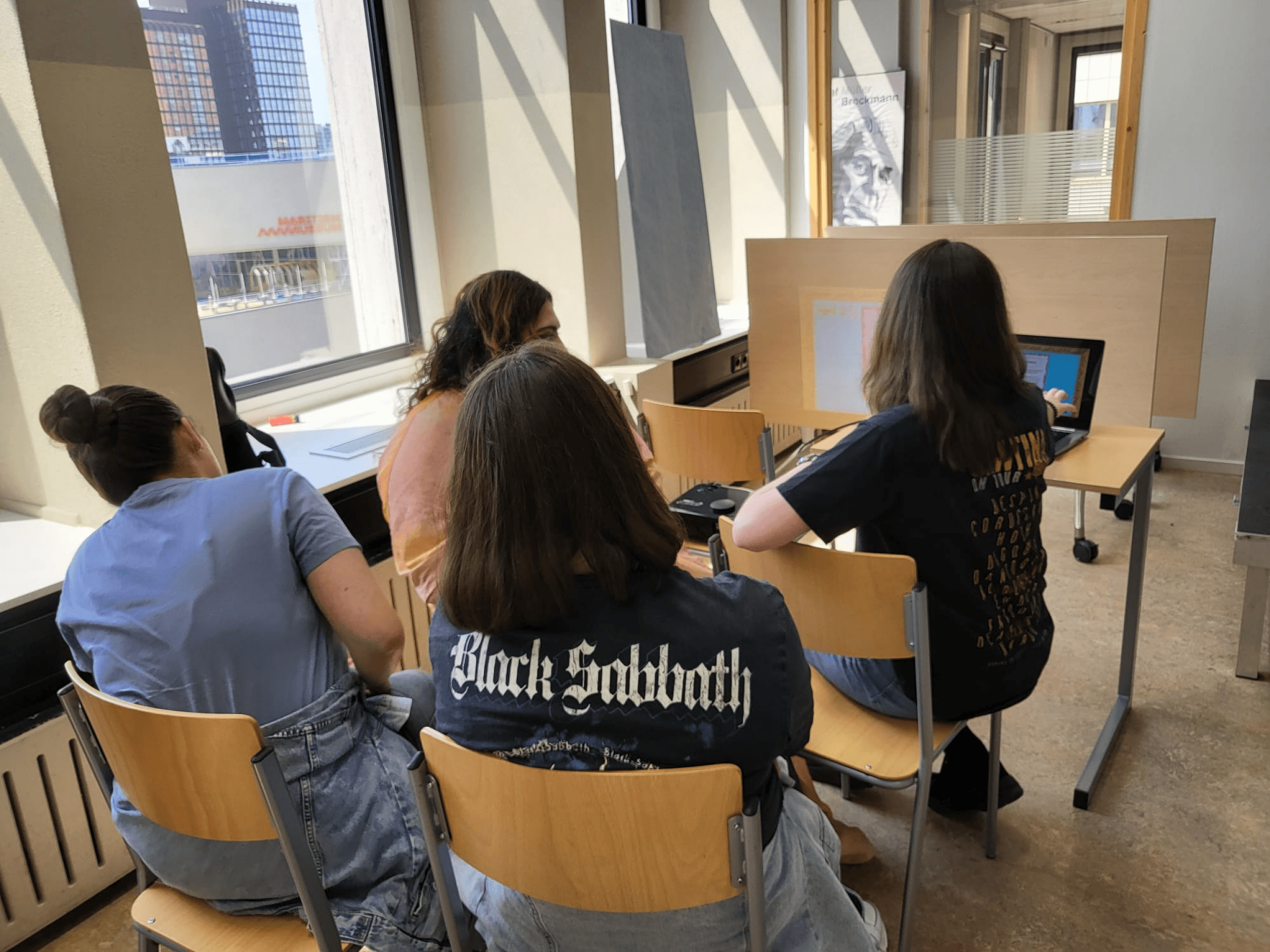
Testing with four players revealed several insights. Text on the screen was hard to read due to small fonts. The first game was very straightforward, so it finished quickly, while the word game was challenging, requiring extra tools like paper and taking longer to complete. In the third game, players acting out tasks sought elevated spaces, and some found performing socially challenging. Overall, players described the experience as varied and socially engaging but noted that the games felt too individual, as each task was completed separately rather than collaboratively.
Final Results
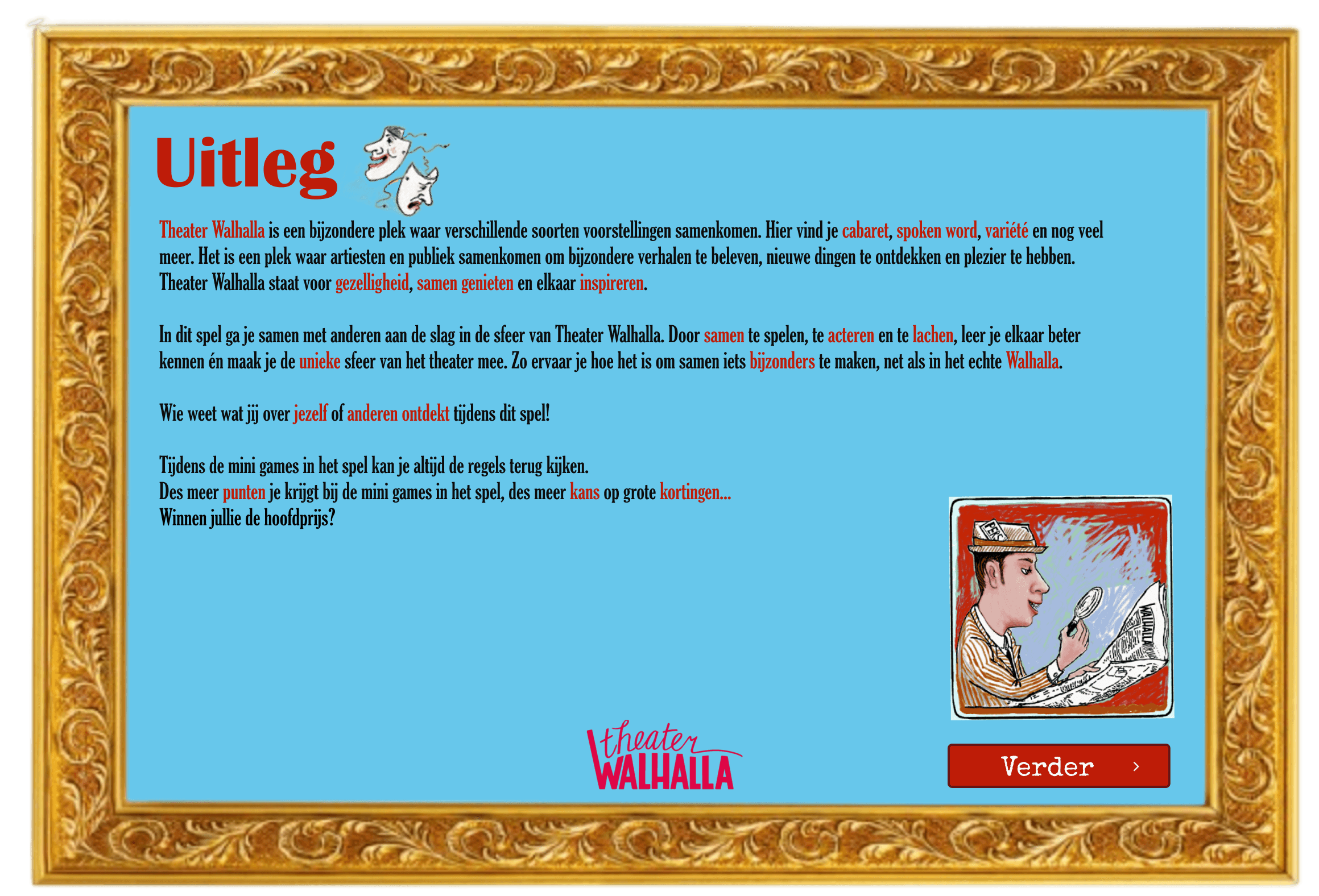
After three iterations of testing and refinement, our final prototype is an escape room focused on collaboration and information sharing. It delivers information playfully through a mix of digital and physical elements, keeping users engaged. Research showed that the target group prefers variety, which is why both types of elements are included.
Desk and field research also revealed that the target group enjoys interactive and visual learning. Throughout the iterations, we conducted concept and usability testing to refine the design, as several early concepts were very similar. The final result can be seen in the video.
Key Features
Collaborative Mini Games
Players work together in shared tasks that encourage interaction and teamwork rather than individual play.
Accessible & Social Design
Clear instructions, readable interfaces, and low-pressure social interactions make the experience approachable for all players.
Immersive Atmosphere
Visuals, audio, and spatial elements are used to reflect the intimate and social atmosphere of Theater Walhalla.
Role Based Gameplay
Each player takes on a theatre-related role, creating variety and helping players understand behind-the-scenes activities at Theater Walhalla.
Recommendations
1
The Backstage Pass game is played at one or multiple physical locations, supported by the Theater Walhalla staff.
6
Any Backstage Pass or discount won during the game can be redeemed when purchasing tickets, for example by entering a discount code.
5
A number of theatre tickets are reserved for players who want to attend a performance afterward, guaranteeing a first real theatre experience.
4
After completing the game, players can directly purchase tickets for a performance happening that week at Theater Walhalla.
2
Additional mini games are added to help players get to know each other better and encourage collaboration.
3
The experience combines both physical and digital elements.
Next Steps
Interactive & Accessible Experience
We recommend this concept to Theater Walhalla as it translates the theatre's atmosphere and sense of community into an interactive and accessible experience. By encouraging collaboration and social interaction, visitors feel more comfortable and connected to the theatre even before attending a performance.
Engaging Young Adults
The concept also helps present Walhalla's diverse programme to young adults by actively introducing different genres and shared experiences. This increases curiosity, lowers the barrier to visiting, and encourages group visits and repeat attendance.
Team Credits
Sarah van der Berg
Marketing Manager
sarah@velddsesfsdfer.com
+31 6 1234 5678
Tom Janssen
Email Marketing Specialist
tom@ewsfdsfes.com
+31 6 8765 4321
Lisa de Vries
Content Creator
lisa@esfesdf.com
+31 6 2468 1357
Mike Peters
Creative Director
mike@esdfes.com
+31 6 9876 5432
Team Credits